Keynote speakers
 Elina Hiltunen is a Doctor of Military Sciences and Doctor of Business Administration, and holds an MSc in Chemical Engineering from Finland. A true multi‑talent, Hiltunen is an entrepreneur, keynote speaker, columnist, and the author of 15 books. Her work focuses on futures thinking, weak signals, and the forces shaping tomorrow’s societies and services. Her global influence has been recognized by Forbes, which listed her among the world’s 50 leading female futurists.
Title of her speech is: A Better Future Starts Small. Be the One Who Builds It.
In this lecture, the speaker discusses the future and what may lie ahead for us in the years and decades to come. The lecture explores the major changes taking place in the world, the megatrends and the challenges they pose for the future. For example, we are living through a time of climate and ecological crises, which will profoundly shape our future. Although we as humanity face difficult challenges, the lecturer’s message is one that encourages positivity: we can all do our bit to create a better future. The future will not simply happen on its own; it requires active participants. Any one of us can be such an agent of change. In the lecturer’s view, working towards a positive future is important: the lecturer has herself suffered from severe depression in the past and received help for it. She feels that, particularly having received help herself when she was at her lowest ebb, it is important to pass on the goodwill once one starts to regain one’s strength. In her lecture, she presents examples of how anyone can become a contributor to a better future. The speaker’s message is: if nobody does anything, nothing will happen; but if everyone does something – even something small – things will start to happen. Be the one who starts a change for a better future!
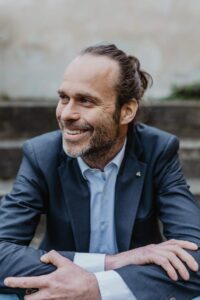 Roman Gabrhelík is a Full Professor of Health Psychology and Addiction Sciences at the First Faculty of Medicine, Charles University, Prague, where he focus on research, teaching, and the development of evidence-based approaches to prevention and treatment of substance use and addictive behaviors. His work centers on eHealth and mHealth innovations, particularly in the areas of screen use, digital wellbeing, and digital parenting. He is involved in developing and implementing technology-based tools and platforms that support prevention and early intervention, including projects aimed at helping families navigate children’s and adolescents’ use of digital media (e.g., DigiRozhledna.cz). Alongside this, he conduct research using large-scale national health registry data to better understand patterns of substance use, behavioral addictions, and treatment outcomes at the population level. He also lead and collaborate on international research focused on emerging substance use trends, including current studies on kratom use in Central Europe. More broadly, he works with national and international partners on initiatives that strengthen prevention systems and promote public health. His current interests include the use of digital technologies, registry-based research, and data-informed approaches to improve the accessibility, quality, and effectiveness of prevention and intervention efforts across the lifespan.
Title of his speech is: Mental Health Across Generations in a Digital World.
Digital technologies have become part of everyday life. Today’s children are the first generation growing up entirely in a digital world, while parents, caregivers, professionals, and health systems are still adapting to its opportunities and challenges. This keynote reflects on what these changes mean for mental health across generations. Drawing on experiences from digital parenting, eHealth, and emerging AI-supported interventions, it will explore both the opportunities and the challenges of a rapidly evolving digital world. Rather than asking whether technology is good or bad for mental health, the presentation will focus on a more important question: how can we ensure that digital innovations genuinely improve people’s lives? The keynote will argue that the challenge is no longer whether we can create digital tools for mental health, but whether we can implement them in ways that people trust, use, and benefit from. Through examples from research and practice, it will highlight the importance of evidence, collaboration, and responsible innovation in shaping a healthier digital future.
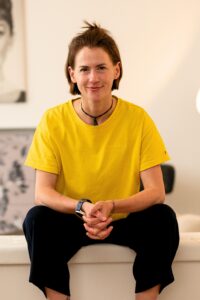 Dominique de Marné. Born in 1986 and based in Munich, she is a leading mental health advocate, speaker, writer, and entrepreneur. Since 2015, she has been working to change how we think and talk about mental health—earlier, better, more openly, and more normally. Her work is deeply informed by 15 years of lived experience, including a decade of struggling without knowing she was ill and believing it was her own fault. Today, she places strong emphasis on daily mental health maintenance, prevention, and mental health literacy. She is the founder of Mental Health Crowd and collaborates with a wide range of stakeholders—from politics and schools to businesses and large public events such as the Mental Health Rocks Run. A strong believer in #mentalhealthrocks, she challenges narrow and gloomy narratives of mental illness and brings a hopeful, empowering perspective to the field. She is a Board Member of Mental Health Europe, a member of the steering board of Aktionsbündnis Seelische Gesundheit in Germany, and holds a B.A. in Communication Studies & Psychology.
 Collective discussion and Panel facilitated by Johanna Couvée, researcher, curator and workshop facilitator based in Brussels, Belgium
Reimagining mental health: epistemic justice and praxes for collective care
Who gets to define mental health, and whose knowledge is left out? How do social structures and systems of oppression shape mental wellbeing? And what can lived, practice-based and activist perspectives teach us about mental health? Amid growing recognition of a “paradigm crisis” in mental health, this collective discussion proposes that transformation in mental health requires more than new knowledge. Centering epistemic justice, it invites participants to critically reflect on how mental health is defined, by whom, and under which conditions. Bringing together lived experience, practice-based and academic expertise, this session opens with a panel discussion and evolves into a participatory exchange. We will explore how diverse epistemic perspectives, and particularly those emerging from marginalized and practioners’ contexts, challenge dominant narratives and generate alternative understandings of mental health. By examining how concepts are interpreted, negotiated, and reclaimed in public and collective spaces, we ask: how can we co-create more inclusive ways of knowing and practicing mental health together?
Johanna Couvée brings together mental health, artistic practice, and social change. As clinical psychologist and sociologist with experience as a psychiatric nurse, she currently pursues a PhD in Educational Sciences focused on public discourses of mental health, through which she develops a politically conscious pedagogy rooted in collective care and systemic change. As a facilitator, she works with cultural, educational and political organisations, where she guides processes of reflection and transformation. To this end, she designs participatory spaces that connect awareness, embodiment and action, with a focus on whiteness, social change, mental wellbeing and collective care. As co-founder and co-curator of There is Nothing Wrong with People (@tinwwp), she developed a cultural programme that bridges the personal and the political through workshops, talks and performances.